
Child-Safe Vinyl Flooring provides a safe, comfortable, and durable surface for nurseries and family homes. In modern nursery design, safety and comfort are essential, making child-safe vinyl flooring one of the most trusted options in Dubai. With advanced cushioning layers, slip-resistant surfaces, and easy-to-clean finishes, it helps reduce the risk of injuries from everyday falls while maintaining high standards of hygiene, durability, and long-lasting performance in early childhood environments.
Cushioning impact tests play a crucial role in evaluating how well vinyl flooring absorbs shock and protects children during everyday activities. In Dubai nurseries, where active play and learning go hand in hand, flooring must combine softness underfoot with long-lasting resilience against heavy use and frequent cleaning.
This article explores how child-safe vinyl flooring performs under impact testing, why it is increasingly preferred by nursery designers, and how it helps create safer, more supportive learning spaces for young children.
Critical Fall Height Ratings for Vinyl Over Different Underlayments
Critical fall height ratings measure how well a flooring system reduces injury risk during falls, especially in children’s play areas. While vinyl itself is not typically certified like playground surfacing, the combination of vinyl plus underlayment can significantly influence cushioning performance.
Softer, thicker underlayments such as rubber or high-density foam improve energy absorption, reducing impact force. Rigid SPC floors provide less cushioning but offer better structural stability. In residential toddler spaces, the goal is a balanced system that minimizes fall severity without compromising floor durability or causing excessive surface movement.
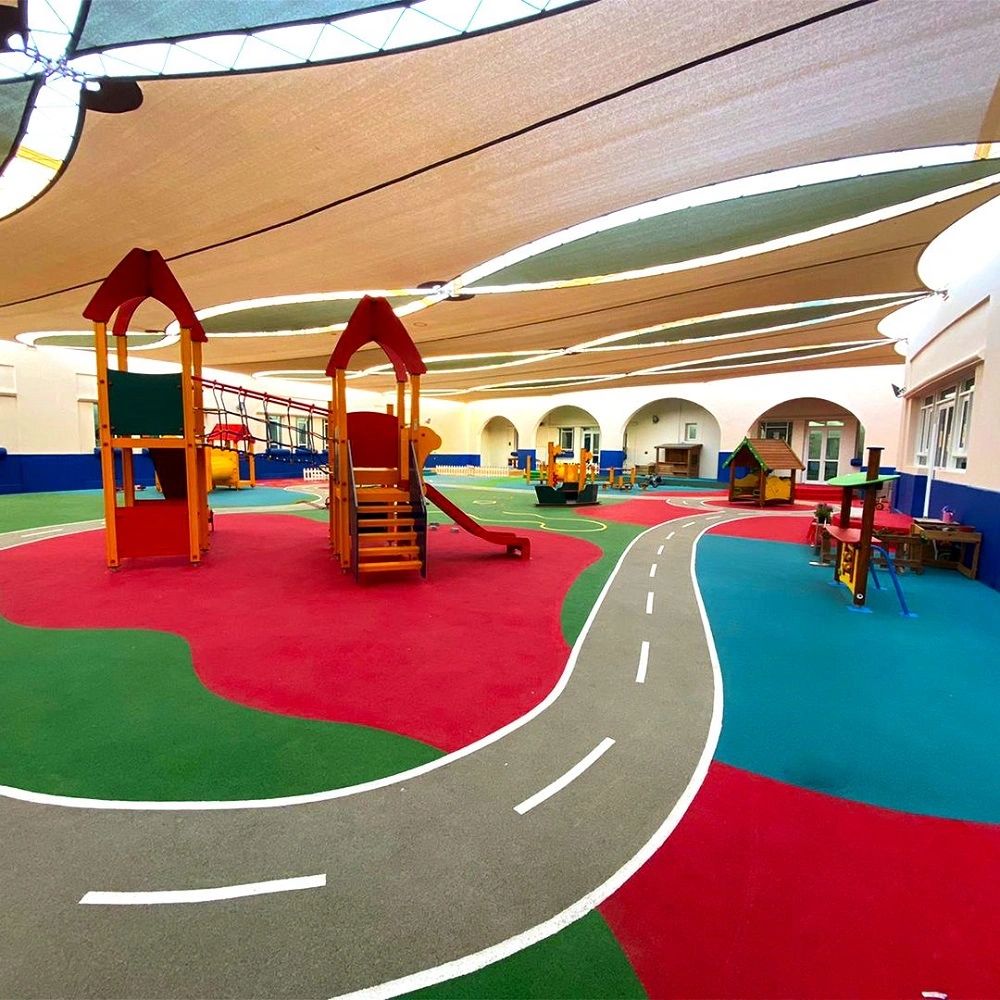
Child-Safe Vinyl Flooring: Cushioning Impact Tests for Dubai Nurseries
ASTM F1292: Measuring G-Force Reduction for Head Impacts
ASTM F1292 is a safety standard used to evaluate impact attenuation and head injury risk on protective surfacing. It measures how much force (G-force) is transmitted when a person falls onto a surface. Lower G-force values indicate better shock absorption.
While primarily used for playgrounds, the concept is relevant when assessing cushioned vinyl flooring systems in children’s environments. Underlayment thickness, material density, and flooring flexibility all influence results. However, standard residential vinyl flooring is not formally certified under ASTM F1292 unless specifically tested as a complete system.
Soft Vinyl vs. Rigid SPC for Toddler Play Areas (Comparison)
Soft vinyl (traditional LVT) and rigid SPC flooring behave differently in toddler environments. Soft vinyl provides slightly more cushioning, which can reduce impact severity during minor falls. However, it is also more prone to indentation from toys and furniture.
SPC flooring is harder and more rigid, offering superior durability and dent resistance but less natural cushioning. When paired with a quality underlayment, SPC can still provide comfortable underfoot softness while maintaining structural stability. In Dubai homes, SPC is often preferred for long-term resilience, especially in high-traffic family areas.
How Vinyl Thickness Affects Cushioning for Falls
Vinyl thickness influences cushioning but does not solely determine safety performance. Thicker planks may feel softer underfoot, but true impact absorption depends more on the underlayment system beneath the vinyl. A 6–8 mm SPC floor with high-quality foam or rubber underlay can outperform thicker vinyl without proper cushioning support.
In toddler play areas, a balanced system is essential to absorb minor impacts while maintaining stability. Excessively soft flooring can create instability for walking toddlers, while overly rigid surfaces reduce comfort. The ideal setup combines moderate thickness with engineered underlayment support.
Non-Toxic Plasticizers: Which Brands Avoid Heavy Metals
Modern vinyl flooring manufacturers increasingly use non-toxic plasticizers to eliminate harmful substances such as phthalates and heavy metals. Many premium brands now use alternatives like DOTP, which provide flexibility without compromising indoor air quality.
Reputable manufacturers also comply with strict international standards such as FloorScore and GREENGUARD, ensuring low chemical emissions. In family homes, especially with young children, avoiding heavy metals and toxic additives is a key safety priority. High-quality SPC and LVT products from established global brands are typically free from lead, cadmium, and restricted plasticizers.
Slip Resistance (Wet & Dry) for Vinyl Near Sinks and Water Tables
Slip resistance is critical in areas like kitchens, bathrooms, and children’s water play tables. Vinyl flooring is generally designed with textured wear layers to improve grip in both wet and dry conditions. The coefficient of friction (COF) determines how slippery a surface is, with higher values indicating better safety performance.
Dry conditions usually provide strong grip, but wet conditions require textured finishes to maintain traction. In Dubai homes, spill-prone areas benefit from embossed or matte vinyl surfaces that reduce slip risks while maintaining easy cleanability.
Easy-Clean Claims: Removing Crayon, Play-Doh, and Marker Stains
Vinyl flooring is widely marketed as easy to clean, and it performs well against common children’s messes such as crayons, Play-Doh, and washable markers. Most stains remain on the surface wear layer and can be removed using mild detergents or damp cloths. High-quality vinyl with polyurethane coatings resists pigment absorption, making cleanup faster.
However, permanent markers or highly pigmented materials may require stronger cleaning agents if left for long periods. Textured floors may trap residue slightly more than smooth surfaces, but overall vinyl remains one of the most child-friendly flooring options.
Impact of Toy Drag (Plastic Wheels) on Vinyl Wear Layer
Plastic-wheeled toys such as ride-on cars or storage bins can gradually wear down vinyl flooring if dragged repeatedly across the surface. This creates micro-abrasions in the wear layer, especially in lower-grade vinyl products. High-quality SPC flooring with reinforced coatings offers better resistance to this type of mechanical wear.
In children’s play areas, the risk increases in high-traffic zones where toys are frequently moved. Using soft felt pads under toy bases or encouraging lifting instead of dragging can significantly reduce long-term surface damage and preserve flooring appearance.
Best Vinyl Colors That Hide Spills and Stains From Kids
Color selection plays an important role in hiding spills, stains, and everyday messes in children’s spaces. Medium-tone wood colors, warm greys, and natural oak finishes are most effective at disguising imperfections.
Very light floors tend to show colored spills more clearly, while very dark floors highlight dust and lint. Multi-tone or textured patterns provide the best camouflage for frequent activity areas. In Dubai homes with active children, balanced mid-range shades offer the best combination of practicality and aesthetic appeal, reducing the visual impact of daily messes.
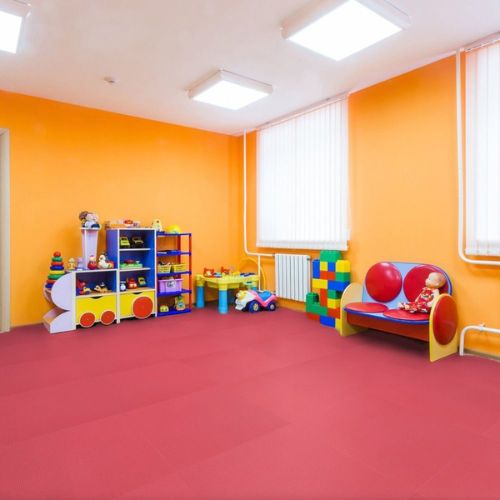
Child-Safe Vinyl Flooring: Cushioning Impact Tests for Dubai Nurseries
Frequently Asked Questions
Is vinyl safer than foam play mats for crawling?
Yes, foam mats degrade and release particles; vinyl is non-porous and cleanable.
What fall height is safe for 4mm vinyl on concrete?
For higher falls, add rubber underlayment for increased protection.
Can I use disinfectant wipes on vinyl floors?
Yes, alcohol wipes (70% max) are safe; avoid bleach and quaternary ammonium compounds.
Does vinyl contain lead or cadmium?
Premium brands test to EN 71-3 (toy safety standard); always ask for test reports.
How to remove permanent marker from vinyl?
Dry-erase marker over the stain, then wipe; the solvent lifts permanent ink.
Is textured vinyl painful for toddlers’ knees?
No, but deep embossing can cause rug burns; choose smooth or low-gloss finishes.
Which vinyl pattern best hides Cheeto dust?
Speckled or multi-color stone patterns; solid colors show every fingerprint.
Can I install vinyl over heated floors in a nursery?
Yes, but keep surface temperature within Dubai health guidelines for kids’ rooms.