
Installing vinyl flooring yourself can seem like a cost-saving and satisfying home improvement project, especially in a city like Dubai where modern interiors and quick renovations are highly popular. However, DIY vinyl flooring installation comes with strict manufacturer guidelines that many homeowners unknowingly overlook.
In Dubai’s unique climate—characterized by high humidity, temperature fluctuations, and air-conditioned environments—small installation mistakes can quickly lead to major issues such as warping, bubbling, or premature wear. Even more importantly, several of these errors can immediately void product warranties, leaving homeowners responsible for costly repairs or replacements.
This article explores the most common DIY vinyl flooring installation mistakes in Dubai and explains how to avoid them to ensure a durable, professional-quality finish that protects both your investment and your warranty coverage.
Skipping Acclimation in Summer: The 48-Hour Rule
Skipping acclimation is one of the most common installation mistakes in hot climates like Dubai. Vinyl planks need time—typically around 48 hours—to adjust to indoor temperature and humidity before installation. Without this step, materials may expand or contract after placement, leading to gaps, buckling, or joint stress.
Summer conditions amplify this risk because transported flooring may be significantly hotter than indoor environments. Proper acclimation ensures dimensional stability and reduces post-installation movement. Even SPC products, which are more stable than traditional vinyl, still benefit from controlled acclimation before installation begins.
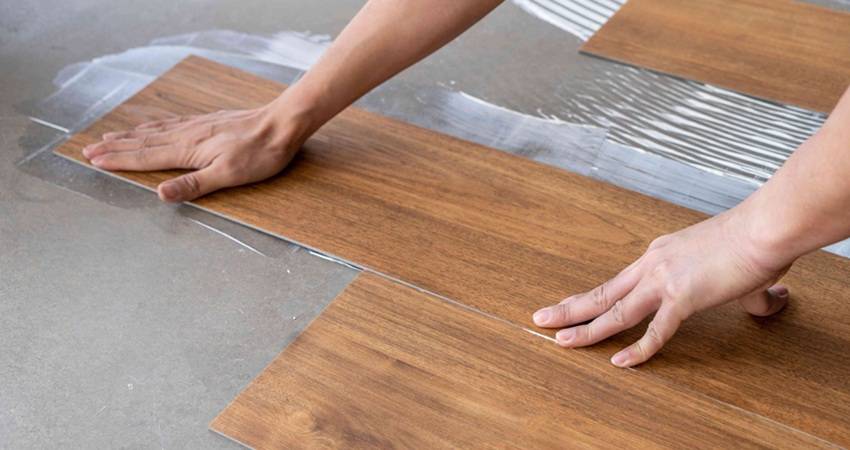
DIY Vinyl Flooring Installation: Dubai Mistakes That Void Warranties
Ignoring Subfloor Moisture Tests in High-Humidity Areas
Subfloor moisture testing is essential in regions with high humidity or concrete slab construction, both common in Dubai. Ignoring this step can lead to adhesive failure, mold growth, or plank deformation over time. Concrete naturally releases moisture, especially in newly constructed or poorly sealed buildings.
If vinyl is installed without checking moisture levels, trapped vapor can compromise flooring integrity from below. Moisture barriers or primers are often required depending on test results. Proper testing ensures long-term durability and prevents costly repairs or premature replacement of the flooring system.
Using Wrong Underlayment for SPC Core in Dubai Apartments
SPC flooring requires carefully selected underlayment because its rigid core already provides structural stability. Using overly soft or thick underlayment can cause excessive flexing, affecting click-lock joints and long-term durability.
In some cases, incorrect underlayment can even void warranties. High-density acoustic underlayments designed specifically for SPC are preferred, as they provide sound reduction without compromising support. In Dubai apartments, where acoustic performance is important, balancing noise control with structural stability is critical. The right underlayment improves comfort while preserving the engineered strength of SPC flooring systems.
Forgetting Expansion Gaps Near Dubai’s Floor-to-Ceiling Windows
Floor-to-ceiling windows increase heat exposure, which intensifies vinyl expansion and contraction. Forgetting to leave proper expansion gaps near these areas can lead to buckling, lifted edges, or pressure buildup in floating floors. In Dubai’s climate, sunlight through large glass panels can create localized heating zones that affect flooring stability.
Expansion gaps allow the material to move naturally without structural stress. Installers must ensure consistent spacing along all perimeter edges, especially in sun-exposed rooms. Proper planning prevents visible deformation and maintains long-term performance in high-heat environments.
Installing Over Dirty Subfloor: Sand and Dust Traps
Installing vinyl over a dirty subfloor is a critical error that can significantly reduce flooring lifespan. Sand, dust, and debris trapped underneath the planks create uneven surfaces and can cause clicking noises, wear layer damage, and joint instability.
In Dubai, where fine sand is common, thorough subfloor cleaning is essential before installation. Even small particles can create pressure points that gradually affect plank alignment. Vacuuming and wiping the surface ensures proper adhesion (for glue-down) or stable support (for floating systems). Clean preparation is a key factor in achieving a professional finish.
Cutting Planks Without Proper Tools: Chipped Edges
Using improper cutting tools leads to chipped edges, uneven joints, and poor installation quality. Vinyl planks require sharp utility knives, fine-tooth saws, or specialized flooring cutters depending on thickness and core type. SPC flooring in particular demands more precise cutting due to its rigid structure.
Inadequate tools can cause micro-fractures along edges, weakening the locking system and affecting visual finish. Clean, accurate cuts ensure tight seams and professional appearance. For large projects in Dubai villas or apartments, professional-grade tools are essential to maintain installation quality and reduce material waste.
Blocking AC Vents After Installation: Thermal Shock Risk
Blocking air conditioning vents with furniture or flooring elements can create uneven temperature distribution, leading to thermal stress on vinyl flooring. In Dubai, where air conditioning runs continuously, localized cooling or heating can cause expansion differences across the floor surface.
This may result in joint stress or slight warping over time. Proper airflow ensures consistent temperature regulation across the entire space. Furniture placement should always consider ventilation paths. Maintaining unobstructed vents helps preserve flooring stability and prevents localized thermal shock effects that could compromise long-term performance.
Using Household Cleaners During First Week: Hazing Problem
Using harsh household cleaners during the first week after installation can cause surface hazing on vinyl flooring. This occurs when chemical residues react with the protective wear layer before it fully stabilizes after installation. Strong alkaline or acidic cleaners can dull the finish and leave streaky buildup.
During the initial curing period, only mild pH-neutral cleaners or simple damp mopping should be used. This allows adhesives and surface coatings to fully settle. In Dubai installations, where cleaning habits are often frequent, following this rule is essential to preserve long-term visual clarity.
When DIY Saves Money vs. When to Hire a Pro
DIY installation can save money in simple, small-scale projects, especially with floating click-lock vinyl in rectangular rooms. It is suitable for homeowners with basic tools and moderate experience. However, professional installation is strongly recommended for complex layouts, herringbone patterns, glue-down systems, or large luxury spaces.
In Dubai villas and apartments with irregular layouts, professionals ensure proper subfloor preparation, expansion control, and precise alignment. Mistakes in DIY projects can lead to costly repairs or material waste. Choosing between DIY and professional work depends on project complexity, risk tolerance, and desired finish quality.
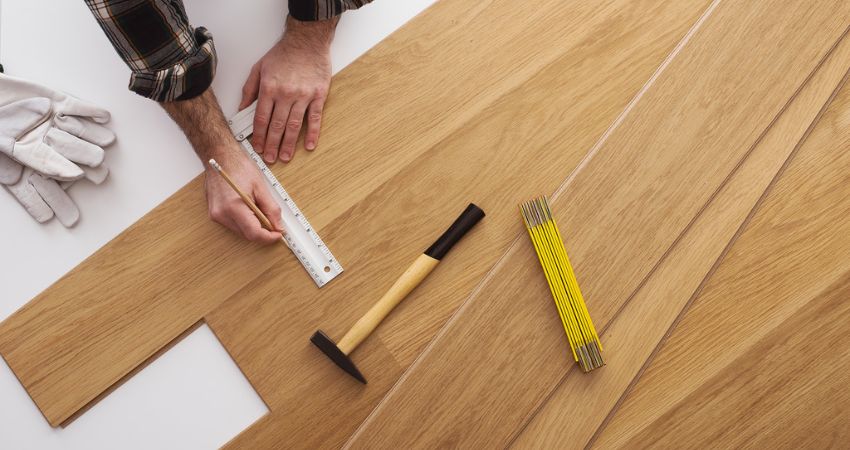
DIY Vinyl Flooring Installation: Dubai Mistakes That Void Warranties
Frequently Asked Questions
Can I install vinyl in one day in a Dubai apartment?
No, acclimation alone takes 48 hours; rushing voids most warranties.
What’s the most common DIY mistake in Dubai?
Not leaving enough expansion gap near windows; summer heat causes buckling.
Do I need a moisture meter for DIY installation?
Yes, essential for ground floor villas and Palm Jumeirah properties.
Can I install vinyl over existing vinyl?
Only if the old floor is perfectly flat, clean, and dry; floating method only.
What tool do DIYers forget most often?
A tapping block and pull bar; using a hammer directly damages locking edges.
How to fix a gap I accidentally created?
Use a vinyl pull bar gently; never use glue on floating floor joints.
Is underlayment included in most vinyl planks?
Some have attached underlayment; adding more can cause joint failure.
Can I install vinyl in a bathroom as a DIY project?
Yes, but use welded seams or SPC with full moisture seal around edges.