
Doors are among the most fundamental architectural elements in any building. While often overlooked, they serve critical roles in safety, privacy, energy efficiency, and spatial organization. From entryways to interior partitions, doors shape how people move through and experience a home.
Beyond their functional purpose, doors also influence aesthetics and comfort. They frame transitions between rooms, regulate light and airflow, and contribute to the overall character of a space. Understanding the different types of doors, their materials, and their practical benefits helps homeowners make informed decisions that enhance both performance and design.
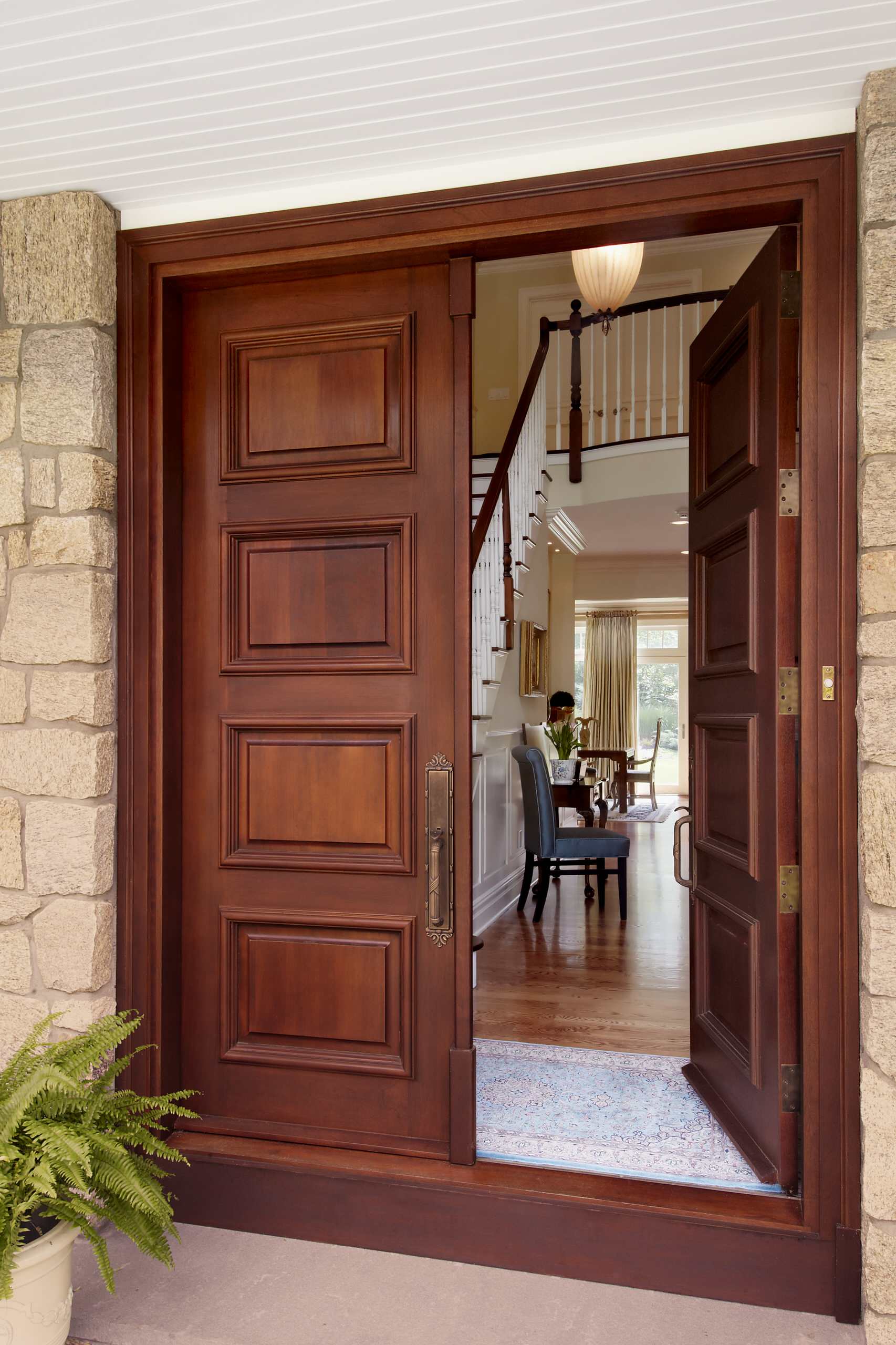
11-042 – Grande Interiors – 48 Chestnut Grove, Guilford, CT. Catherine O’Brien.
Understanding the Basic Functions of Residential Doors
At their core, doors serve several essential purposes within a home. While styles and materials vary, their primary functions remain consistent.
1. Providing Security
Exterior doors create a protective barrier between the home and the outside environment. Strong construction and reliable locking systems help deter unauthorized access.
2. Ensuring Privacy
Interior doors allow individuals to create personal space, whether in bedrooms, bathrooms, or home offices.
3. Controlling Sound
Solid-core doors reduce sound transmission between rooms, improving comfort and quiet.
4. Managing Light and Airflow
Certain door styles allow natural light to flow between spaces while maintaining separation.
5. Defining Space
Doors create clear boundaries within open floor plans, giving structure to interior layouts.
Without properly selected and installed doors, a home may lack both functional efficiency and architectural coherence.
Different Types of Doors and Their Practical Applications
There are numerous door styles designed to meet specific needs and spatial requirements. Each type serves a particular function depending on layout and use.
Hinged Doors
The most common type, mounted on side hinges and swinging open. Ideal for bedrooms and main entrances.
Sliding Doors
Move horizontally along a track, saving space. Frequently used for patios and closets.
Folding Doors
Panels fold against each other when opened. A folding door is especially useful for large openings that connect indoor and outdoor areas.
Pocket Doors
Slide into the wall cavity, maximizing floor space.
French Doors
Feature glass panels and often open outward, allowing light flow between rooms.
Pivot Doors
Rotate on a central hinge system, creating a modern visual statement.
Choosing the right type depends on room size, intended function, and structural limitations.
Materials Commonly Used in Modern Door Manufacturing
Door materials significantly affect durability, maintenance requirements, insulation performance, and appearance.
Solid Wood
- Strong and durable
- Offers excellent insulation
- Can warp in high humidity if not treated
Engineered Wood
- More resistant to warping
- Cost-effective alternative to solid wood
Steel
- Highly secure
- Commonly used for exterior applications
Fiberglass
- Resistant to dents and corrosion
- Energy-efficient
Glass
- Enhances light flow
- Often tempered for safety
Material choice influences not only performance but also long-term maintenance. For example, steel doors may require less upkeep than natural wood in humid climates.
How Entry Doors Influence Security and Privacy Levels
Entry doors serve as the primary access point to a home, making security a top priority. A well-constructed entry system provides both physical protection and psychological reassurance.
Important security features include:
- Solid-core construction
- Reinforced frames
- Multi-point locking systems
- Impact-resistant materials
In residential architecture, entryways often define the visual identity of the house. In urban settings such as Dubai, homeowners frequently explore durable and climate-appropriate solutions like front doors dubai options that withstand heat while maintaining structural integrity.
Privacy also plays a significant role. Proper door sealing prevents sound leakage and blocks visibility when closed, ensuring comfort in both shared and private spaces.
The Role of Doors in Interior Design and Space Planning
Doors are more than barriers; they are design elements that influence spatial perception.
Visual Continuity
Matching door finishes with flooring or wall colors creates harmony.
Framing Perspectives
Doors frame views from one room to another, enhancing architectural flow.
Enhancing Light
Glass-paneled doors increase brightness without removing separation.
Creating Flexibility
Movable door systems allow spaces to shift between open and enclosed layouts.
Interior designers often treat doors as integral components of the design scheme rather than afterthoughts. Proportion, finish, hardware style, and color all contribute to the final aesthetic.
Energy Efficiency Factors to Consider in Door Selection
Energy efficiency is a crucial consideration, particularly for exterior doors exposed to weather conditions.
Insulated Core Materials
Doors with foam or composite cores reduce heat transfer.
Weather Stripping
Prevents air leaks around edges.
Proper Sealing
Ensures tight closure and limits drafts.
Double or Triple Glazing
Improves thermal performance for glass doors.
An energy-efficient door reduces heating and cooling demands, improving indoor comfort while conserving energy.
In warmer climates, selecting materials that resist heat expansion and UV exposure helps maintain performance over time.
Maintenance Practices That Extend Door Lifespan
Routine care keeps doors functioning smoothly and extends their lifespan. Maintenance requirements vary by material, but general practices apply across types.
Inspect Hinges and Hardware
- Tighten loose screws
- Replace worn components
Clean Surfaces Regularly
- Use appropriate cleaners for wood, metal, or glass
Repaint or Reseal Wood Doors
- Protects against moisture damage
Check Alignment
- Misaligned doors may drag or fail to close properly
Lubricate Moving Parts
- Ensures smooth opening and closing
Neglecting maintenance can lead to warping, sticking, or reduced insulation performance. Preventive care ensures consistent functionality.
Safety Considerations When Choosing Household Doors
Safety extends beyond security. Doors must also protect occupants during emergencies and daily use.
Fire Safety
Certain doors are rated to resist fire for a specific duration, slowing the spread of flames.
Impact Resistance
Exterior doors should withstand strong winds and debris.
Child Safety
Soft-close mechanisms prevent finger injuries.
Accessibility
Wider door frames improve mobility access.
Glass Safety Standards
Tempered or laminated glass reduces injury risk if broken.
Choosing doors that meet local safety codes ensures compliance and protects occupants.
Conclusion
Doors play a vital role in shaping the comfort, security, and functionality of a home. From defining interior spaces to protecting against environmental elements, they serve multiple purposes that extend far beyond simple entry and exit points.
By understanding different door types, materials, energy efficiency factors, and safety considerations, homeowners can make informed choices that align with both practical needs and aesthetic preferences. Thoughtful selection and proper maintenance ensure that doors continue to perform reliably for years to come.
FAQs
1. What are the main types of doors used in homes?
Common residential door types include hinged, sliding, folding, pocket, French, and pivot doors, each serving different spatial and functional needs.
2. How do doors improve home security?
Doors enhance security through solid-core construction, reinforced frames, and reliable locking systems that prevent unauthorized access.
3. What materials are most durable for exterior doors?
Steel and fiberglass are highly durable for exterior use, while solid wood offers strength but may require more maintenance.
4. How often should residential doors be maintained?
Basic inspections should be done every few months, with repainting or resealing performed as needed depending on material and climate.
5. What factors affect door longevity?
Material quality, climate exposure, installation accuracy, and regular maintenance all influence how long a door lasts.
6. Why are entry doors important for insulation?
Properly insulated and sealed entry doors reduce heat transfer, maintain indoor temperature stability, and improve overall energy efficiency.