
Choosing the right vinyl flooring installation method can make a significant difference in durability, especially in a demanding climate like Dubai’s. Among the most common options, floating and glue-down vinyl flooring stand out for their performance, appearance, and long-term reliability. Homeowners and property developers often debate which one offers a longer lifespan under Dubai’s high temperatures, humidity fluctuations, and heavy daily use.
This article explores the key differences between floating and glue-down vinyl, comparing their strength, stability, maintenance needs, and overall durability to help you determine which option truly lasts longer in Dubai homes and commercial spaces.
Cycle Testing: Foot Traffic Simulations on Both Methods
Cycle testing simulates long-term foot traffic to evaluate how floating and glue-down vinyl systems perform under repeated stress. In these tests, glue-down installations typically show more stable results because the flooring is fully bonded to the subfloor, reducing micro-movement over time.
Floating systems rely on interlocking joints, which can experience slight shifting under heavy or repetitive loads. In high-traffic areas like Dubai offices or busy apartments, this difference becomes more noticeable over years of use. However, high-quality SPC click systems still perform well when properly installed with correct expansion gaps and underlayment support.
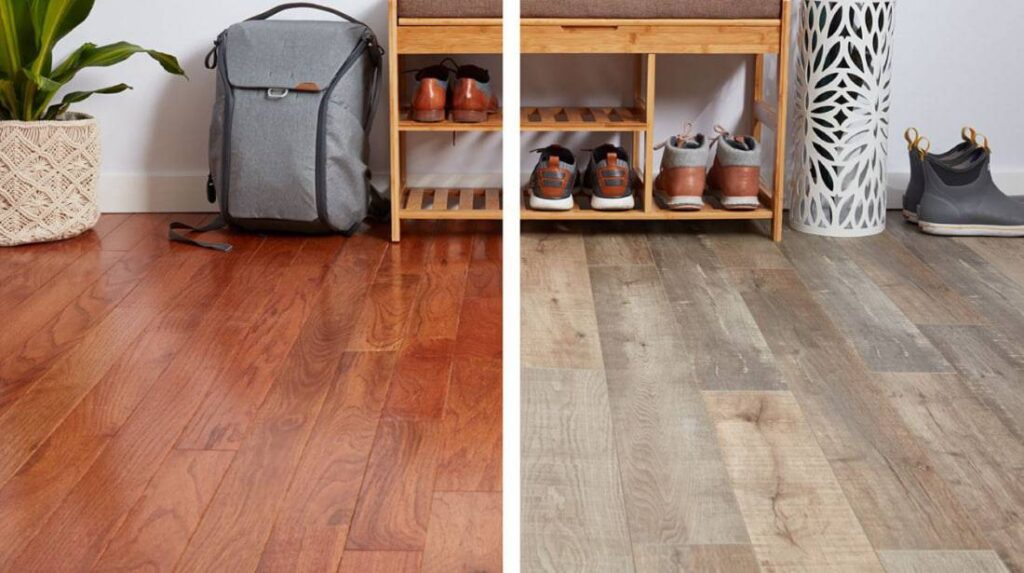
Floating vs. Glue-Down Vinyl: Which Lasts Longer in Dubai?
Moisture Migration Effects: Why Glue-Down Wins in Palm Basements
Moisture migration from subfloors is a critical issue in below-grade or semi-underground spaces such as basements in Palm Jumeirah villas. Glue-down vinyl generally performs better in these conditions because it creates a continuous bond that reduces air gaps where moisture vapor can accumulate.
Floating floors, by contrast, allow a small cavity between the plank and subfloor, which can trap humidity and increase the risk of mold or odor development if vapor barriers are insufficient. Proper moisture testing is still essential for both methods, but glue-down systems offer better long-term stability in high-moisture environments.
Repair Complexity: Replacing Damaged Planks in Floating vs. Fixed
Repair complexity differs significantly between floating and glue-down vinyl flooring systems. Floating floors are easier to repair because individual planks can often be unlocked and replaced without disturbing the entire installation. This makes them more convenient for residential use, especially in Dubai apartments.
Glue-down flooring, however, requires adhesive bonding, making plank removal more labor-intensive and often involving cutting and scraping. While repairs are more complex, glue-down systems offer greater stability and fewer movement-related issues. The choice depends on whether ease of repair or long-term structural performance is the priority.
Underfloor Heating Compatibility: Which Method Transfers Heat Better
Glue-down vinyl generally provides better heat transfer efficiency compared to floating systems when used with underfloor heating. Because the flooring is directly bonded to the subfloor, thermal energy moves more efficiently through the adhesive layer.
Floating floors introduce a slight insulating air gap and underlayment layer, which can reduce heat transfer speed.
However, modern low-density acoustic underlayments can still perform adequately if designed for radiant heating systems. In Dubai’s luxury villas and apartments with underfloor heating, glue-down systems are often preferred for consistent and responsive temperature control.
Sound Transmission Differences in High-Rise JLT Apartments
In high-rise environments like JLT, sound transmission performance depends heavily on installation method. Floating floors tend to absorb more impact sound when paired with quality acoustic underlayment, reducing footstep noise within the room.
However, they may generate slight hollow sounds due to the air gap beneath. Glue-down systems reduce internal movement and provide a more solid acoustic feel, but can transmit more impact vibration into the structure if the subfloor is not acoustically treated. Overall performance depends on the full assembly, including slab insulation and perimeter sealing, not just the flooring method alone.
Installation Speed Comparison for Business Bay Offices
Installation speed is a major consideration for commercial spaces such as Business Bay offices. Floating vinyl systems are significantly faster to install because they do not require adhesives, curing time, or complex subfloor bonding. They can often be walked on immediately after installation.
Glue-down systems take longer due to adhesive application, drying time, and precise alignment requirements. However, glue-down floors may be preferred in high-traffic offices for their stability and durability. In time-sensitive commercial projects, floating floors offer clear advantages in speed and minimal operational disruption during installation.
Subfloor Prep Stringency: Floating Allows More Margin for Error
Floating vinyl flooring systems are more forgiving when it comes to subfloor imperfections. Minor irregularities can be compensated for using underlayment, making them suitable for renovation projects where subfloor correction is limited. Glue-down installations, however, require highly precise subfloor preparation.
Any unevenness, dust, or moisture issues can affect adhesive bonding and long-term performance. In Dubai construction environments, where concrete slabs may vary in quality, floating systems are often chosen for quicker installation. Nevertheless, premium glue-down systems demand strict preparation standards to ensure durability and prevent future flooring issues.
Removal Considerations for Future Renovations
Removal ease is an important factor when planning long-term flooring solutions. Floating vinyl floors are relatively easy to remove because they are not permanently bonded to the subfloor. This makes them ideal for rental properties or future renovation flexibility in Dubai apartments.
Glue-down floors are significantly more difficult to remove, often requiring mechanical scraping and surface preparation before new flooring can be installed. This increases renovation time and cost. However, glue-down systems provide superior long-term stability. The choice depends on whether future flexibility or permanent installation strength is more important for the property.
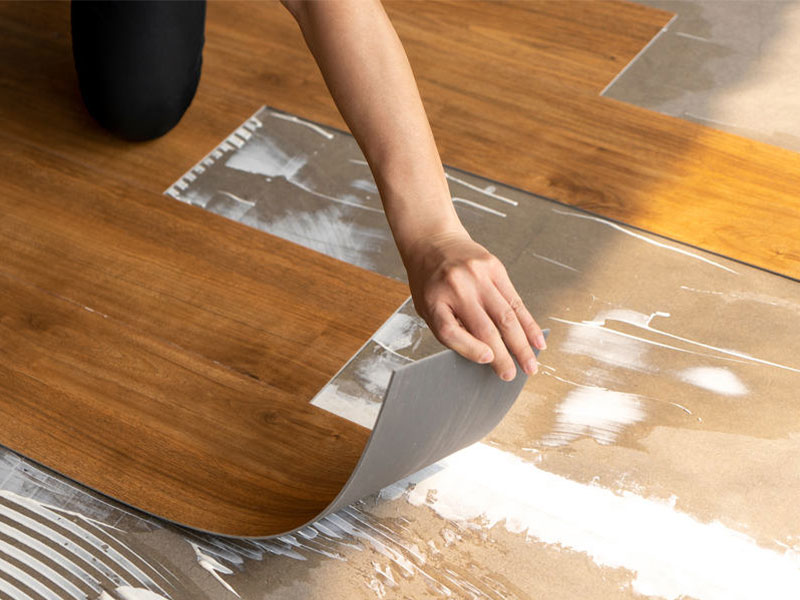
Floating vs. Glue-Down Vinyl: Which Lasts Longer in Dubai?
Frequently Asked Questions
Can I convert floating to glue-down later?
No, because glue-down requires a smooth, residue-free subfloor; you’d need complete removal.
Which method handles Dubai AC temperature swings better?
Glue-down, because floating planks can pump (vertical movement) at joints.
Is glue-down vinyl permanent like tile?
No, it can be removed with heat guns and scrapers, but it is labor-intensive.
Does floating vinyl feel hollow underfoot?
Yes, especially with thin underlayment; glue-down feels solid like wood.
Which method is better for rental properties?
Floating; easier and cheaper to replace individual damaged planks between tenants.
How does each method affect resale value?
Glue-down adds perceived quality; floating is seen as temporary by some buyers.
Can I install floating vinyl over existing tiles?
Yes, if tiles are flat and grout lines are filled; glue-down requires tile removal.
Which method has more warranty claims in Dubai?
Floating due to joint separation in low-humidity AC environments.