
Vinyl flooring has become one of the most popular flooring choices in Dubai due to its stylish appearance, affordability, and impressive durability. However, one of the most common questions homeowners and property investors ask is: How long does vinyl flooring actually last in Dubai’s unique climate? With intense heat, high humidity levels in coastal areas, and the constant presence of dust and sand, flooring materials in the UAE face challenges that can significantly affect their lifespan.
The good news is that modern vinyl flooring is specifically engineered to withstand heavy foot traffic and demanding environmental conditions. Depending on the quality of the product, installation methods, and maintenance practices, vinyl flooring in Dubai can remain attractive and functional for many years.
In this guide, we explore real lifespan data, examine the factors that influence durability, and reveal practical tips to help you maximize the performance and value of your vinyl flooring investment.
Residential Vinyl: Average Years in Dubai Marina Apartments
In Dubai Marina apartments, quality residential vinyl flooring typically lasts 10–20 years, depending on wear layer thickness, maintenance practices, and sun exposure. Units occupied by small families or professionals often experience moderate foot traffic, allowing premium SPC or luxury vinyl planks to remain attractive for well over a decade.
Apartments with large balcony access points may experience higher sand intrusion, which can accelerate wear. Proper cleaning, UV protection, and furniture protection pads significantly influence lifespan. Higher-quality products with wear layers of 20 mil or more generally outperform entry-level flooring in long-term residential applications.
How Long Does Vinyl Flooring Last in Dubai? Real Lifespan Data
Commercial Vinyl: Hotel Corridor Performance in Downtown Dubai
Hotel corridors represent one of the most demanding environments for vinyl flooring due to continuous foot traffic, luggage wheels, housekeeping carts, and frequent cleaning. Commercial-grade vinyl in Downtown Dubai hotels typically delivers 7–15 years of service before major replacement becomes necessary.
Performance depends heavily on wear layer thickness, cleaning protocols, and traffic volume. Premium commercial vinyl with enhanced polyurethane coatings often maintains its appearance much longer than standard products. Regular maintenance and localized repairs can further extend service life in hospitality environments where appearance standards remain exceptionally high.
Factors That Double Vinyl Lifespan: Installation Quality
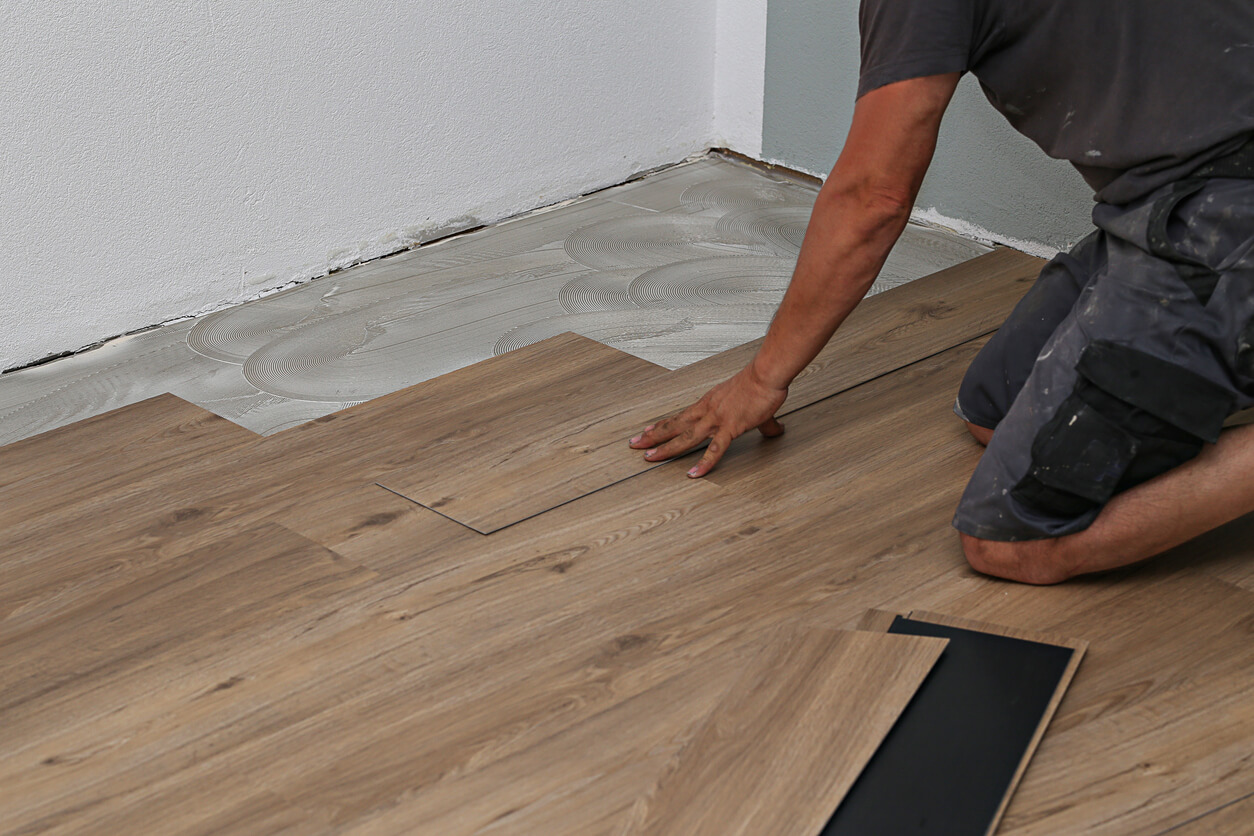
Installation quality has a direct impact on flooring longevity and can effectively double a floor’s useful life. Proper subfloor leveling prevents stress points and joint failures. Moisture testing avoids adhesive breakdown and warping issues. Correct expansion gaps accommodate temperature fluctuations without buckling.
High-quality transitions and edge protection reduce damage at vulnerable locations. Professional installers also ensure proper acclimation and manufacturer compliance. In Dubai’s challenging climate, these details are especially important because heat, humidity, and sand exposure magnify installation-related weaknesses over time.
Factors That Half Vinyl Lifespan: Sand and Sun
Sand and sunlight are two of the most damaging environmental factors affecting vinyl flooring in Dubai. Sand acts as an abrasive, gradually scratching the wear layer with daily foot traffic. UV exposure from large windows can cause fading, discoloration, and accelerated aging of surface coatings.
Combined, these factors can reduce expected flooring lifespan by 50% or more if preventive measures are not taken. Entry mats, regular vacuuming, UV-filtering window films, and strategic furniture placement help minimize damage and preserve the floor’s appearance for significantly longer periods.
WPC vs. SPC: 10-Year Longevity Comparison
Over a 10-year period, SPC (Stone Plastic Composite) flooring generally demonstrates better dimensional stability and durability than WPC (Wood Plastic Composite) flooring. SPC’s rigid mineral core provides superior resistance to dents, heat-related expansion, and heavy furniture loads.
WPC offers greater comfort underfoot and improved sound absorption but may be more susceptible to compression and indentation over time. In Dubai’s hot climate, SPC typically performs better in sun-exposed rooms and high-traffic areas. Both can achieve long service lives, but SPC usually retains its structural integrity more effectively.
Signs Your Vinyl Needs Replacement (Wear Layer Burn-Through)
One of the clearest indicators that vinyl flooring requires replacement is wear layer burn-through. This occurs when the protective surface layer has been worn away, exposing the decorative print beneath. Other warning signs include widespread discoloration, deep scratches that cannot be repaired, persistent lifting at joints, moisture-related swelling, and visible cracking.
Isolated damage can often be repaired, but extensive wear across multiple areas usually indicates the floor has reached the end of its service life. At this stage, replacement becomes more cost-effective than repeated repairs.
Extending Vinyl Life With Professional Refinishing (Is It Possible)
Unlike hardwood flooring, most vinyl products cannot be sanded and refinished because the decorative layer is relatively thin. However, professional restoration services can sometimes extend appearance life through deep cleaning, protective coating application, and localized repairs.
Surface restoration can improve gloss consistency and remove stubborn staining, but it cannot reverse wear layer burn-through or major structural damage. In Dubai, professional restoration is most effective for cosmetic improvement rather than full renewal. Once the wear layer is significantly compromised, replacement remains the only long-term solution.
Warranty Claims Data: Which Brands Pay Out in UAE
Warranty approval rates depend less on brand reputation and more on whether installation and maintenance requirements were followed. Most manufacturers require proof of proper moisture testing, acclimation, subfloor preparation, and cleaning procedures before evaluating claims.
In the UAE, denied claims commonly involve excessive heat exposure, moisture issues, or installation errors rather than manufacturing defects. Products from established international manufacturers generally offer more structured claims processes, but successful warranty outcomes typically depend on documentation quality and compliance with installation guidelines rather than brand name alone.
When to Replace vs. Deep Clean Vinyl Floors
A professional deep clean is appropriate when flooring suffers from embedded dirt, surface haze, minor staining, or loss of visual freshness but remains structurally sound. Replacement becomes necessary when there is widespread wear layer damage, severe fading, recurring moisture problems, extensive joint failure, or large areas of irreversible scratching.
As a rule, if cosmetic issues dominate, cleaning and restoration are usually sufficient. If the flooring’s structural performance has deteriorated, replacement is the more economical long-term choice. A professional assessment can help determine whether maintenance or replacement offers the best return on investment.
How Long Does Vinyl Flooring Last in Dubai? Real Lifespan Data
Frequently Asked Questions
Does vinyl last longer in villas or apartments in Dubai?
Apartments last longer (12-15 years) due to less sand and more controlled humidity.
Can vinyl be refurbished after 10 years?
No, the wear layer cannot be reapplied; only full replacement works.
What kills vinyl fastest in Dubai?
Sand abrasion combined with UV exposure; this combination wears 3x faster.
Do cheap vinyl brands fail faster in Dubai’s climate?
Yes, cheap plasticizers evaporate within 2-3 years causing cracking.
How often should I replace vinyl in a commercial Dubai space?
Every 7-10 years for medium traffic; premium commercial vinyl lasts 15 years.
Can I claim vinyl replacement on home insurance?
If due to flood or AC leak, yes; normal wear and tear is not covered.